
Reviewed · QUEENSTOWN INDOOR & RAINY DAY ATTRACTIONS
Kiwi Park Queenstown Admission
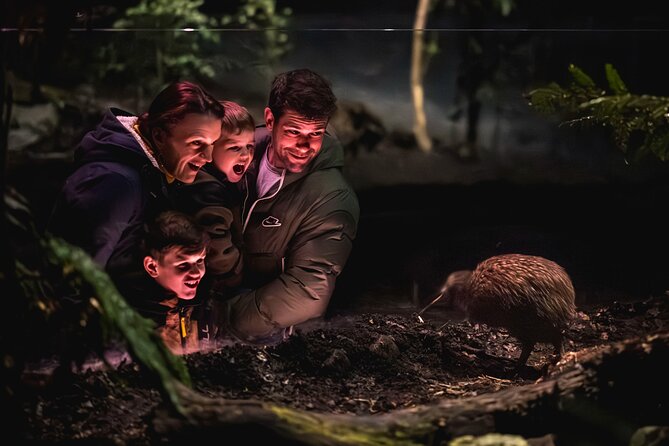
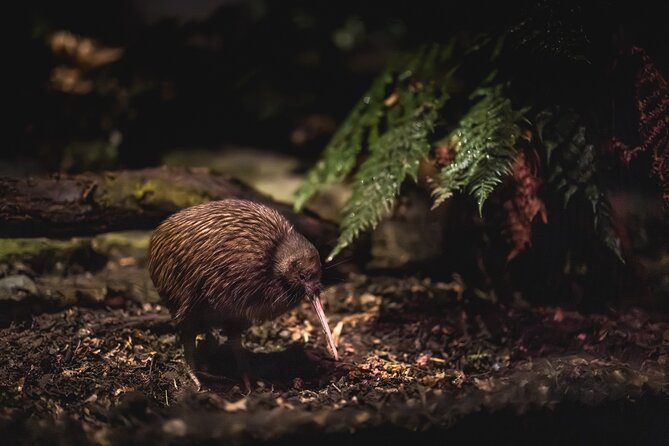
Seeing a kiwi in the wild is a rare treat. At Kiwi Park, you have a far better chance of spotting New Zealand’s national bird in a darkened nocturnal house, where the birds search for food and move through their burrows. Give your eyes time to adjust, and the shadowy shapes become surprisingly clear.
I like the all-day admission, which lets you plan around the scheduled kiwi encounters and conservation show rather than rushing through. I also like the park’s setting: five acres of native bush, streams, bird enclosures, and walking paths right in central Queenstown, close to the gondola.
The main drawback is scale. This is a small wildlife park, not a full zoo, and some parts of the kiwi house are very dark. At $39.72 per person, the visit makes the most sense if seeing kiwi and supporting local conservation are high on your list.
In This Review
- Key points before you go
- Kiwi Park’s small size works in its favor
- Start with the timetable, not the entrance gate
- The kiwi house: expect darkness and patience
- Conservation shows bring the birds to you
- Tuatara and the other native species
- The audio guide lets you set your own pace
- Conservation is the reason the price matters
- A practical two-hour plan
- Who will enjoy Kiwi Park most
- Should you book Kiwi Park Queenstown?
- FAQ
- How long does a visit to Kiwi Park usually take?
- What are the Kiwi Park opening hours?
- Is kiwi viewing included in the admission price?
- Are conservation shows included?
- What time are the kiwi encounters?
- What time are the conservation shows?
- Is an audio guide included?
- Is parking included?
- Can I cancel for a full refund?
Key points before you go
- Kiwi viewing happens in a dark nocturnal enclosure, so wait for your eyes to adjust before deciding the birds are hard to see.
- The conservation show is included, with native birds such as kakariki, kereru, and birds of prey.
- A complimentary audio guide lets you explore at your own pace and is available in several languages, including Mandarin.
- The tuatara encounter brings you close to a reptile often described as a living dinosaur.
- Plan on two to three hours if you attend a show, a kiwi encounter, and walk through the park’s bird exhibits.
- The central location is handy, especially if you are also visiting the Skyline gondola or need a cold-weather activity.
Kiwi Park’s small size works in its favor
Kiwi Park covers about five acres, or two hectares, in the heart of Queenstown. You enter near the base of the gondola, then follow paths through native bush rather than walking through a series of large open paddocks.
That compact layout makes the park easy to fit into a busy Queenstown day. You can visit before or after the gondola, stop in during poor weather, or spend a relaxed morning here without giving up half a day of sightseeing.
The paths include some slopes, so comfortable walking shoes are sensible. The park is not presented as a difficult hike, and most people can take part, but anyone with mobility concerns should expect uneven or gently steep sections.
The setting is part of the appeal. You walk past forest, trout-filled streams, and carefully managed enclosures. It feels more like a native bush sanctuary than a traditional animal park, although the limited size also means you should keep your expectations in check.
You will not find a huge collection of mammals or large exhibits. The focus is New Zealand wildlife, especially birds, reptiles, and conservation work. For many people, that focused approach is more useful than a broad zoo visit.
More things to do indoors in Queenstown:
- Fear Factory Queenstown
★ 4.5 · 248 reviews - Wanaka: Combo Entry to Puzzling World
★ 4.7 · 153 reviews - Queenstown: Hidden Underwater Theatre Experience
★ 4.5 · 135 reviews
Start with the timetable, not the entrance gate
Kiwi Park is open daily from 9:30 a.m. to 5:30 p.m. The ticket is valid for the full day, so you do not need to see everything in one pass.
The best plan is to check the day’s times as soon as you arrive. Kiwi encounters run several times daily, with slightly different schedules in the warmer and cooler seasons. From October through April, listed sessions run at 10 a.m., 11 a.m., 12:15 p.m., 1 p.m., 2:15 p.m., 3 p.m., 4:15 p.m., and 5 p.m.
From May through September, sessions are listed at 10 a.m., 11 a.m., 12:15 p.m., 1 p.m., 2 p.m., 3:45 p.m., and 4:43 p.m. That final listed time looks unusual, so confirm the current schedule when booking or on arrival.
Conservation shows are also seasonal. From October through April, they are scheduled for 11:30 a.m., 1:30 p.m., and 3:30 p.m. From April through September, the listed times are 11:30 a.m. and 3 p.m.
I would begin with the first suitable kiwi encounter or conservation show, then walk the rest of the park. This gives you a clear shape for the visit and leaves enough time to return to an enclosure you especially liked.
Some people arrive early, and that is a sensible choice if kiwi viewing is your main reason for coming. The park is open at 9:30 a.m., while the first kiwi encounter starts at 10 a.m.
The kiwi house: expect darkness and patience
The kiwi enclosure is the main event. It is designed to copy the bird’s nighttime conditions, since kiwi are nocturnal and spend daylight hours in underground burrows.
This means the room is genuinely dark. Photographs can give the wrong impression if you expect a bright, close view. At first, you may see only movement or an outline. Give your eyes time to adapt, keep noise low, and watch the ground carefully.
The kiwi move around searching for food. Their long bills and quick, purposeful steps make them fascinating to watch once you can pick them out. The birds are also more vocal than many people expect, which adds another layer to the encounter.
Keeper presentations explain kiwi behavior, their burrows, and the conservation work aimed at protecting them. At times, several kiwi may be active at once. The exact number of birds can change, but the park has been home to four kiwi at a time according to the supplied details.
Do not treat this like a quick photo stop. Allow at least 20 to 30 minutes for the dark room if you want a fair chance to see the birds properly. Keep children quiet and remind everyone not to use bright screens or flash photography. Loud voices can make the viewing less pleasant for everyone and may disturb the birds.
The darkness is a real drawback for anyone expecting a crisp, close-up animal display. Yet it is also the reason the visit feels honest. You are seeing kiwi in conditions designed around their needs, not under bright lights arranged for easy photographs.
Conservation shows bring the birds to you
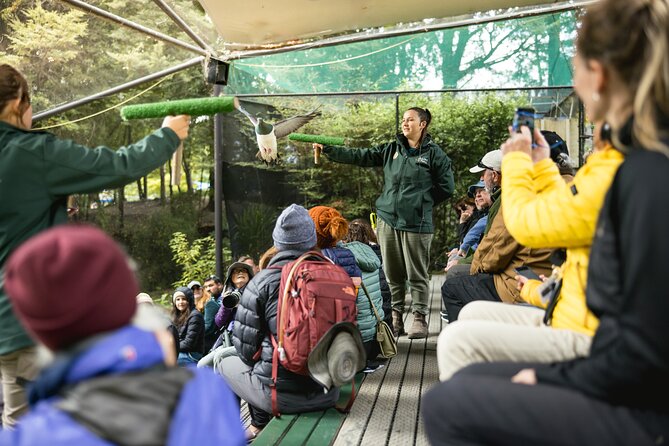
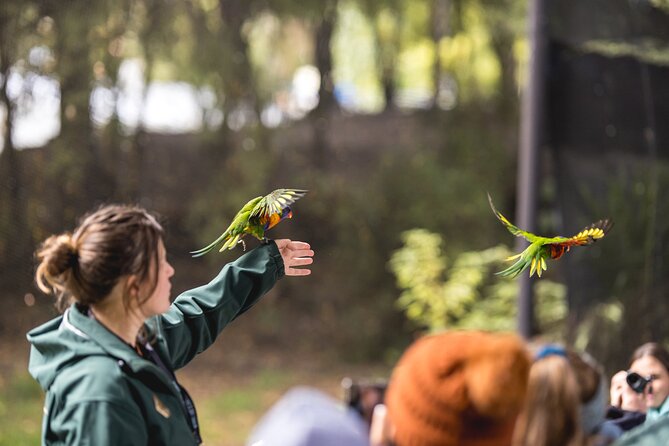
The outdoor conservation show takes place in a netted area and usually runs two or three times daily, depending on the season. It is more than a talk beside an enclosure. Some birds fly free within the covered space, giving you a better sense of how they move.
You may see a kakariki, a small native parakeet, and a kereru, New Zealand’s large native pigeon. The show can also include birds of prey and provide close views of species such as pateke, buff weka, and Antipodes Island parakeets.
This is one of the strongest parts of the visit for families. A keeper can explain the birds’ habits and conservation needs, then bring the subject to life with a real animal nearby. Children get a clear lesson in why New Zealand’s native species need protection, rather than simply seeing labels beside cages.
The presentations have an educational tone but are not dry. The supplied details describe shows that can be informative and funny, and the chance to see animals up close makes the information easier to remember.
Try to attend the show before wandering through every exhibit. It gives you useful context for the birds you will see later. Construction work has affected the talk area at times, so the exact setup may change, but the scheduled show remains part of admission.
A few more Queenstown days out worth weighing up
- Queenstown: Walter Peak Gourmet BBQ & Lake Whakatipu Cruise
★ 4.8 · 2,713 reviews - Shotover River Extreme Jet Boat Ride in Queenstown
★ 5.0 · 2,540 reviews - Small Group, Award Winning Milford Sound Day Experience & Cruise
★ 5.0 · 2,416 reviews - Milford Sound Fly-Cruise-Fly Tour from Queenstown
★ 5.0 · 1,792 reviews
Tuatara and the other native species
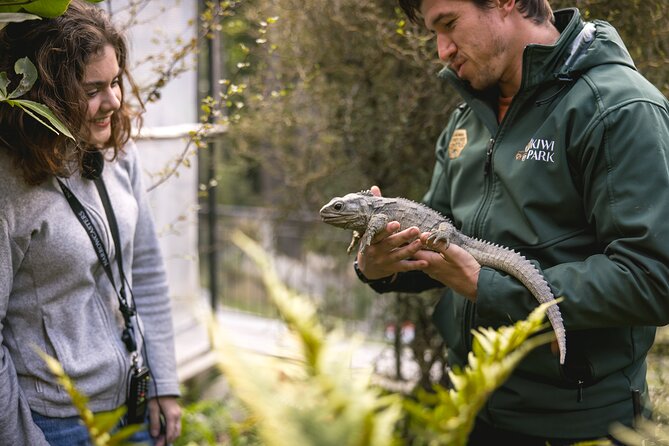
The Tuatara Encounter is another reason not to rush straight from the entrance to the kiwi house. The tuatara looks like a lizard, but it is a very unusual reptile with ancient features. It is often called a living dinosaur, though that nickname is more useful as a quick description than a scientific label.
The encounter lets you see one at close range. For many children, the animal looks like a small dinosaur, and that first close view can be a memorable introduction to New Zealand wildlife.
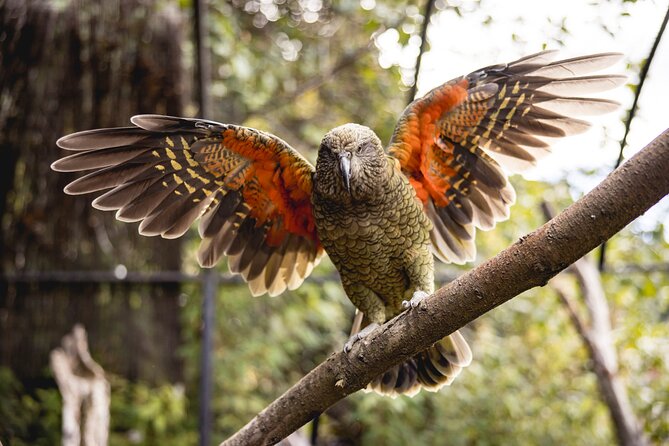
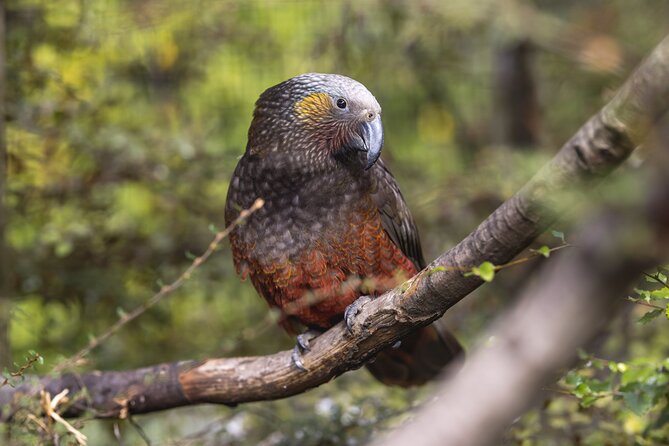
Beyond the tuatara, the park includes more than 20 native bird species. The exhibits feature birds that are difficult to spot in the wild, including kea and other species that may be shy, rare, or active at times when you are unlikely to find them outdoors.
The kea exhibit is a highlight for many people. This alpine parrot is clever, bold, and visually striking. The chance to see one close up adds variety after the quieter kiwi viewing.
Some enclosures allow you to step inside, which creates a more direct connection with the birds. Follow the park’s instructions and keep your movements calm. The point is not to force interaction, but to watch the animals at close range without the usual distance of a standard cage.
The park’s bird collection is likely to be most rewarding if you have an interest in native species. If you are mainly looking for large animals, you may find the admission price harder to justify.
The audio guide lets you set your own pace
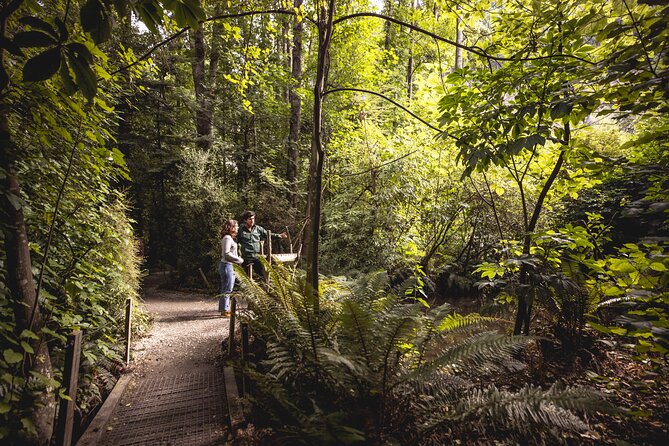
A complimentary audio guide is included with admission. It helps explain the animals and the park’s conservation work while you follow a map through the bush.
This is useful because the park is designed for independent exploration rather than a single fixed walking tour. You can pause at an exhibit, skip one that does not interest you, or return to the kiwi house after visiting the other birds.
The audio equipment is available in different languages, and Mandarin is specifically noted as an option. That makes the park easier to use for families or visitors who do not want to rely only on English-language presentations.
The audio guide also helps turn a short walk into a more meaningful visit. Without it, the park could feel like a series of bird enclosures. With it, you get more information about endangered species, rehabilitation, breeding, and the work needed to return kiwi to the wild.
Still, the guide does not replace the live keeper talks. I would use the audio tour for the walking sections and save your attention for the scheduled conservation show and kiwi presentation.
Conservation is the reason the price matters
Admission costs $39.72 per person. That is not a bargain if you measure value only by the number of animals or the size of the grounds.
Kiwi Park’s value is tied to its purpose. The park works with injured wildlife, breeds kiwi for release into the wild, and teaches visitors how New Zealand protects native species. Your ticket pays for an experience, but it also supports a place built around conservation rather than entertainment alone.
I would judge the price against your priorities. If you want to see a kiwi, hear a keeper explain the species, and see native birds that are hard to find outdoors, the cost is reasonable for a two to three hour visit.
If you want a large zoo with many kinds of animals, the park may feel expensive. Several parts can be walked fairly quickly, and the kiwi enclosure may require patience before the birds become visible.
The all-day ticket improves the value. You can arrive early, attend a show, take a break in central Queenstown, and return later without paying again. It also works well in cold or rainy weather, though some parts of the experience are outdoors.
A practical two-hour plan
For a focused visit, I would use this order:
- Arrive around 9:30 a.m. and collect the map and audio guide.
- Attend the first available kiwi encounter at 10 a.m.
- Spend time in the dark house until your eyes adjust.
- Follow the bush paths past the tuatara and native bird exhibits.
- Attend the 11:30 a.m. conservation show.
- Revisit the kea or any bird enclosure that caught your attention.
- Allow time for the gift shop, honey shop, or cafe if you want a drink or snack.
This plan takes about two hours, though you should allow closer to three if you listen to the full audio guide and take your time.
You can reverse the order if the conservation show fits your schedule better. The important point is to avoid arriving just after both a kiwi encounter and a show, then waiting a long time for the next session.
Wear sun protection even though parts of the park are shaded. The paths are outdoors, and comfortable shoes will make the walk easier. The park is near public transport, but parking is not included.
Who will enjoy Kiwi Park most
This is a strong choice for families, especially children who want to see a real kiwi. The dark house creates a sense of discovery, and the conservation show adds action and humor. The Mandarin audio option is helpful for families who prefer it.
It also suits adults who care about native wildlife and want a central Queenstown activity that does not depend on a long drive. You can combine it with the gondola or use it as a break from outdoor activities.
The park is a particularly useful choice on a cold or rainy day. It is not fully indoors, so bring suitable clothing, but the enclosed bird areas and indoor kiwi viewing give you shelter during key parts of the visit.
I would be more cautious if you have limited mobility, since some paths are steep in places. I would also think twice if your main goal is photography. The kiwi house is intentionally dark, and the conditions are made for the birds rather than for clear pictures.
Finally, give children a quiet briefing before entering the kiwi house. The birds are easier to see when the room stays calm, and patience makes a real difference.
Should you book Kiwi Park Queenstown?
Book it if seeing kiwi is a priority, you want a central activity, and you are happy to support hands-on conservation work. The combination of kiwi viewing, tuatara, native birds, audio commentary, and live shows gives you a useful introduction to New Zealand wildlife.
Skip it if you expect a large zoo, bright animal displays, or a long list of mammals. At $39.72, the park is best value when you attend at least one kiwi encounter and the conservation show, then take time to explore the native bush setting.
Free cancellation is available up to 24 hours before the start time. Inside that window, the payment is not refunded and changes are not accepted.
FAQ
How long does a visit to Kiwi Park usually take?
Plan on approximately two to three hours. You can walk through more quickly, but attending a kiwi encounter, the conservation show, and the keeper presentations takes longer.
What are the Kiwi Park opening hours?
The park is open Monday through Sunday from 9:30 a.m. to 5:30 p.m.
Is kiwi viewing included in the admission price?
Yes. Kiwi viewing and the scheduled kiwi encounters are included with admission.
Are conservation shows included?
Yes. The conservation show is included in the admission ticket. Show times vary by season.
What time are the kiwi encounters?
From October through April, listed times are 10 a.m., 11 a.m., 12:15 p.m., 1 p.m., 2:15 p.m., 3 p.m., 4:15 p.m., and 5 p.m. From May through September, listed times are 10 a.m., 11 a.m., 12:15 p.m., 1 p.m., 2 p.m., 3:45 p.m., and 4:43 p.m.
What time are the conservation shows?
From October through April, shows are listed at 11:30 a.m., 1:30 p.m., and 3:30 p.m. From April through September, shows are listed at 11:30 a.m. and 3 p.m.
Is an audio guide included?
Yes. A complimentary audio guide is included, and audio equipment is available in several languages, including Mandarin.
Is parking included?
No. Parking is not included. The park is near public transportation and is located in central Queenstown.
Can I cancel for a full refund?
Yes, if you cancel at least 24 hours before the experience start time. Cancellations made less than 24 hours in advance are not refunded, and changes inside that period are not accepted.
Just added around Queenstown
- Queenstown Gin and Whiskey tours★ 5.0 · 3 reviews
- Mount Cook Tour: Finish at Queenstown, Christchurch or Dunedin★ 5.0 · 3 reviews
- Queenstown: Nevis Catapult – World’s Biggest!★ 5.0 · 3 reviews
- From Queenstown: Milford Sound Scenic Flight & Nature Tour★ 4.9 · 3 reviews
- Private Transfer from Queenstown Central to Wanaka★ 5.0 · 3 reviews
- Wanaka: Afternoon Boutique Wine Tour★ 5.0 · 3 reviews
- Private 3 Day Queenstown Glenorchy Wanaka and Tekapo★ 5.0 · 3 reviews
- Wanaka: Rob Roy Glacier Guided Hike with Lunch★ 5.0 · 3 reviews
Queenstown Indoor & Rainy Day Attractions, compared.



Browse the lists this tour appears in