
Reviewed · QUEENSTOWN ADVENTURE SPORTS
Wanaka: 2-Hour Beginner Waterfall Cable Climb
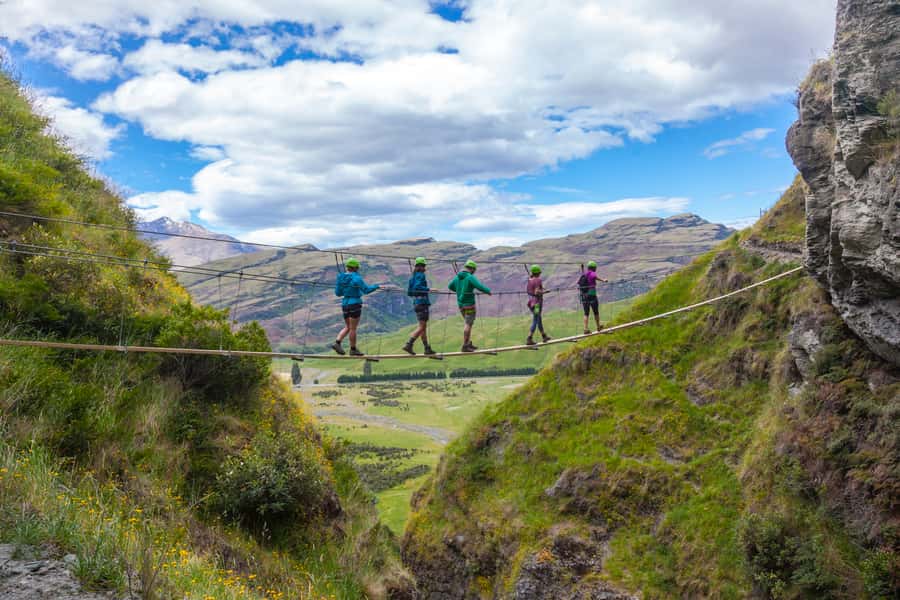
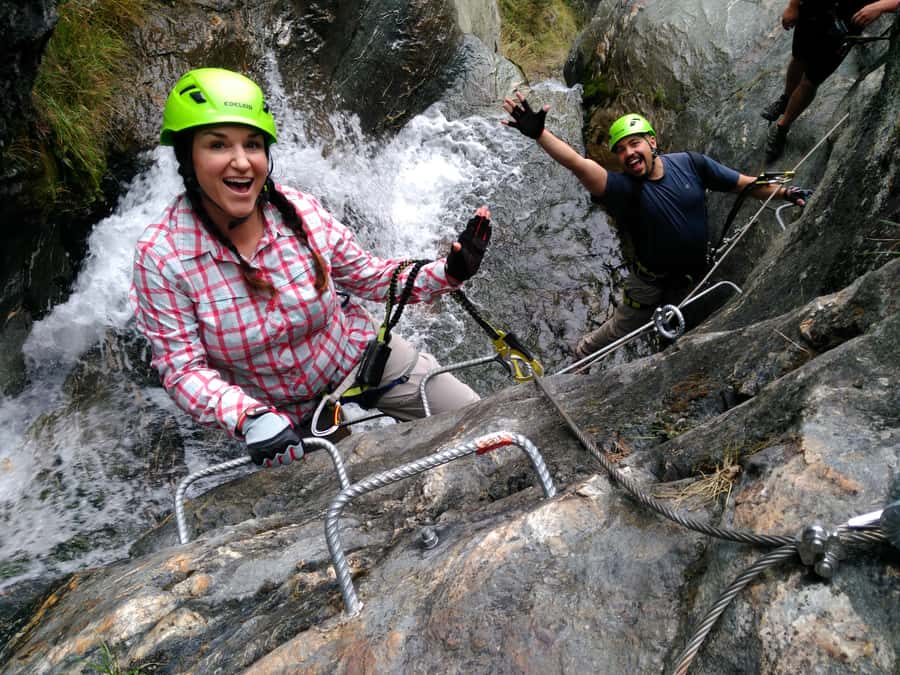
At Twin Falls, you do not simply look at a waterfall. You clip into a steel safety cable and climb beside it, using iron rungs, pegs, ladders, and suspension bridges to reach pools and cliff sections that would otherwise be out of reach. The route is designed for first-timers, with guides such as Rocky, Luke, Maddie, and Sarah known for calm, careful instruction. This is an active mountain outing, not a scenic walk with a few steps.
I like the practice climb before the real route, and I like the small groups, capped at five people per guide. Those details matter when you are nervous about heights or learning how to manage two carabiners on a cable. The main consideration is physical: you need full-body mobility, a moderate level of fitness, and a reasonable comfort with exposure. The beginner route is manageable, but it is still a real climb.
In This Review
- Key points at a glance
- What this Wanaka waterfall climb is really like
- Finding Twin Falls from Wanaka
- The practice climb makes the first real steps easier
- One hour on the beginner route
- The view at the top is part of the reward
- The descent is easier, but not a free ride
- Should you continue to Level 2?
- Who will enjoy this most
- What to wear and pack
- Safety, group size, and guide support
- Booking flexibility and final value
- Should you book the Twin Falls cable climb?
- FAQ
- Where does the waterfall cable climb take place?
- How long does the experience last?
- How much does the beginner cable climb cost?
- Do I need climbing experience?
- What equipment is included?
- Is food or water provided?
- What should I wear?
- What is the minimum age for the activity?
- Is the activity suitable for people with limited mobility?
- Can I cancel the booking?
Key points at a glance
- Climb inside a working farm waterfall: Twin Falls is about 20 minutes west of Wanaka, with the route passing through a private farm setting.
- Learn before you climb: A practice course and safety briefing teach you how to use the helmet, harness, and cable system.
- Expect water, bridges, and height: The beginner route includes rock climbing, ladders, suspension bridges, pools, and smaller waterfalls.
- Small groups make a difference: No more than five people climb with each guide, allowing for steady help on the rock.
- Allow three hours for the outing: The main climbing portion is about 1.5 hours, with walking, preparation, and descent included in the overall timing.
- Level 2 may be offered afterward: Several people found they could continue after Level 1, but the extra section costs more and requires additional time.
What this Wanaka waterfall climb is really like
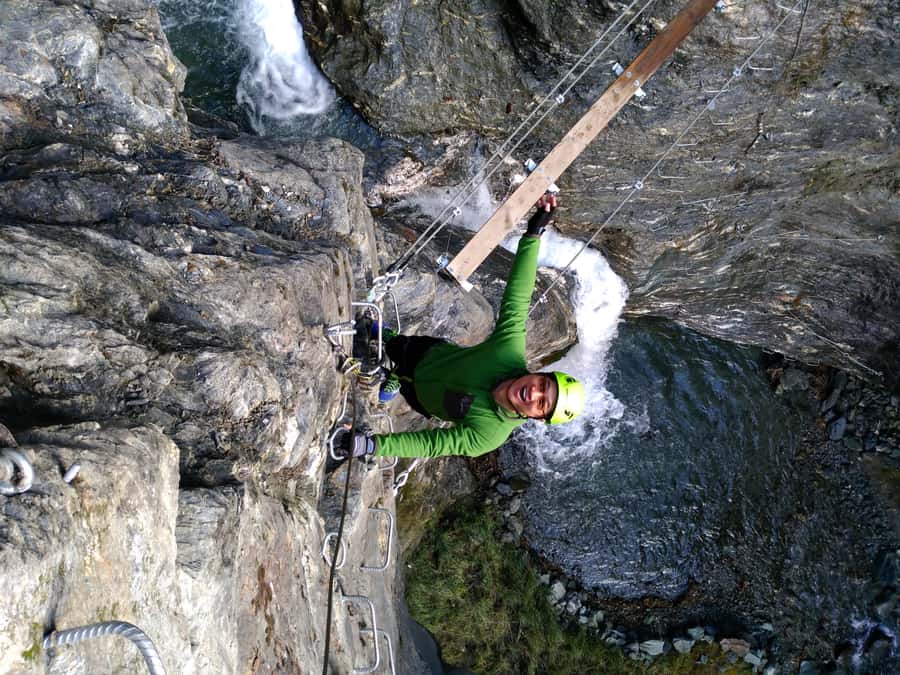
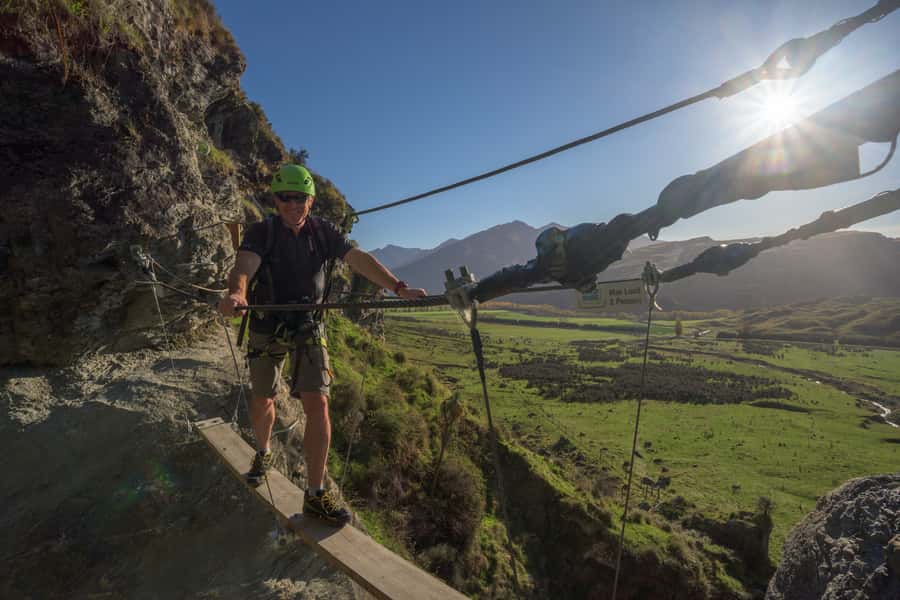
Wildwire Wanaka’s Twin Falls route gives you a taste of via ferrata, an alpine climbing system that uses a fixed cable and metal footholds. You remain attached to the cable as you move, transferring your clips along it while stepping from rung to rung.
That system changes the feel of the activity. You are not relying only on your balance or trying to find natural handholds in the rock. The route has built-in aids, yet you still need to pull, step, stretch, and think about where your feet go next.
The setting makes this special. The climb runs beside a waterfall on a working farm, with small falls and pools appearing as you go higher. The upper views open across farmland toward the mountains and Lake Wanaka. You get a close, wet, cliffside experience and a wide view at the finish.
The advertised price is $118 per person. I consider that fair if you want an active experience rather than another lookout or lake cruise. Your fee includes a guide, helmet, harness, safety briefing, practice climb, water, and a small snack. You are paying for instruction and controlled access to a route you could not safely tackle alone.
It is not the cheapest short activity around Wanaka, and the actual climbing portion is only about an hour on the beginner route. Still, the guide-to-climber ratio, specialist equipment, and unusual setting make the price easier to justify. If you are comparing it with a standard half-day outing, remember that this is a hands-on activity with a genuine physical challenge.
More adrenalin in Wanaka:
- Wildwire Wanaka- Level 2 (4 Hours)
★ 5.0 · 467 reviews - Wanaka: Tandem Skydive Experience
★ 4.8 · 252 reviews - Wildwire Wanaka- Level 1 (2 Hours)
★ 5.0 · 112 reviews
Finding Twin Falls from Wanaka
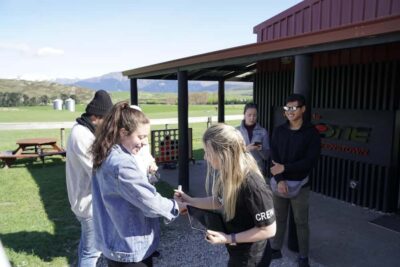
The meeting point is at the locked farm gate in front of the waterfalls. Look for the Wildwire sign. From Wanaka, follow Wanaka-Mount Aspiring Road west along the lake, continuing toward Treble Cone Ski Field and Mount Aspiring National Park.
After about 20 minutes, you reach a cattle stop. Pull out immediately to the left, in front of the two large waterfalls. Arrive 15 minutes before your scheduled departure. This is a rural meeting point, not a town storefront, so give yourself time to identify the gate and get ready without rushing.
The location is part of the appeal, but it also means you need to organize your own transport to the start. The provided information does not include a shuttle from Wanaka. Wear your hiking shoes before you arrive, and keep anything you do not need in the designated storage area at the base.
The practice climb makes the first real steps easier
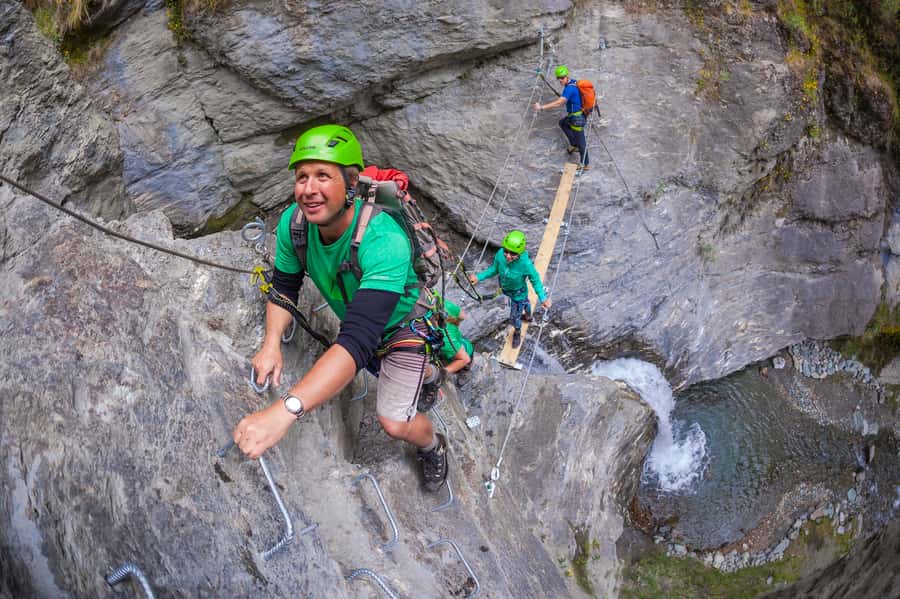
After meeting the guide, you receive your helmet and harness and take part in a safety briefing. The introductory practice climb lets you learn how to use the cable and move your carabiners before you are looking down at a pool or standing on a cliff.
Pay attention here. The most important skill is not simply clipping on. You need to understand how to stay connected while moving around cable sections and how to place your feet on the rungs and pegs. The guide will assist you, but you will enjoy the route more if you take this short lesson seriously.
This introduction is especially useful if you have never climbed outdoors. People with some indoor climbing experience may recognize the general movement, but the waterfall setting adds water, height, uneven rock, and changing footing.
The guides use a reassuring approach. Rocky has been singled out for putting nervous beginners at ease, while Luke and Maddie have been praised for careful support. Other guides named by climbers include Sarah, Connor, Jasmine, Georgia, Tristan, Jasper, Liam, Chester, and Katie. Your own guide will depend on the departure, but the instruction is built around patience and safety rather than speed.
One hour on the beginner route
A short walk takes you from the base toward the cliffs. Then the main route begins, with about an hour of vertical and horizontal climbing.
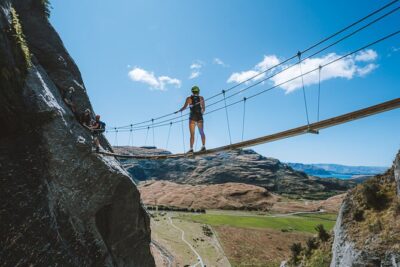
You move along installed cables, iron rungs, pegs, ladders, and bridges. Some sections take you upward beside the falls. Others run across the rock, giving you a chance to catch your breath and look around. The route is not just a straight ladder to the top. Its changes in direction keep you involved.
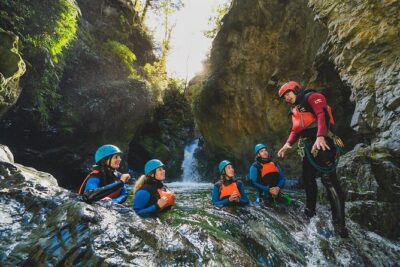
The waterfall gives the climb its character. You may pass smaller falls and pools as you ascend, with water close enough to make the surroundings feel wild even though the route has been carefully prepared. The experience is more intimate than viewing a large cascade from a platform. You are beside the rock and water, not separated from it by a distant lookout.
Suspension bridges add a different kind of challenge. They are thrilling because they move under your weight and expose the drop below, but you remain clipped to the safety system. If heights bother you, focus on the next foothold and let the guide set a calm pace.
The beginner route is physically challenging without needing advanced climbing ability. You will use your arms and legs, and you may need to stretch for a hold. One climber who was 5 feet 4 inches found some reaches required a stretch, but the handholds were well placed. That is useful context: you do not need to be tall, but you do need normal reach and full-body movement.
A few more Wanaka days out worth weighing up
- Stevensons Island 2-Hour Cruise and Nature Walk
★ 4.6 · 160 reviews - Milford Sound: 2-Hour Small Boat Scenic Cruise
★ 4.8 · 2,561 reviews - 2-Hour Milford Sound Scenic Cruise
★ 5.0 · 1,520 reviews - Queenstown: 2-Hour Zipline Tour with 4-Lines
★ 4.7 · 462 reviews
The view at the top is part of the reward
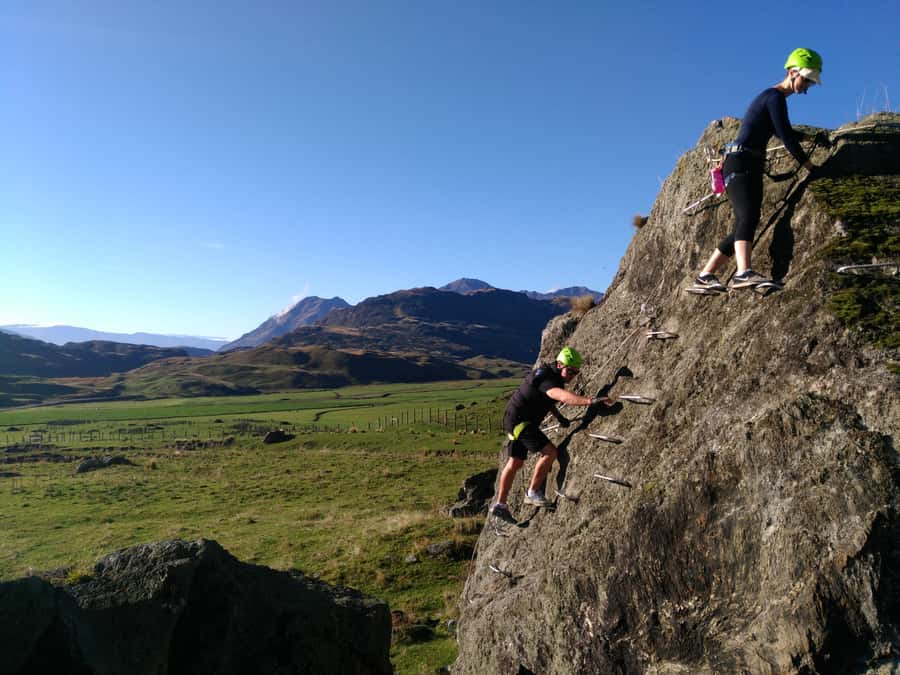
At the end of the beginner trail, there is time for a small snack and drink. This pause lets you look across the farm, mountain ranges, and Lake Wanaka.
The view matters because the route gives you two very different experiences. Lower down, you are concentrating on cables, rungs, water, and the rock immediately around you. At the upper point, the scenery spreads out, and you can see the wider setting that surrounds Twin Falls.
Bring a camera only if you can secure it. A GoPro is best attached to your body, or you can ask the guide about a helmet with a slide attachment. Do not carry a loose camera in a way that interferes with clipping or hand placement. You can take photographs at your own risk, but safety and movement come first.
The supplied information says water and a small snack are included, while a water bottle is not. Bring your own bottle. A daypack is also recommended, but keep it compact enough not to interfere with the harness and climbing system.
The descent is easier, but not a free ride
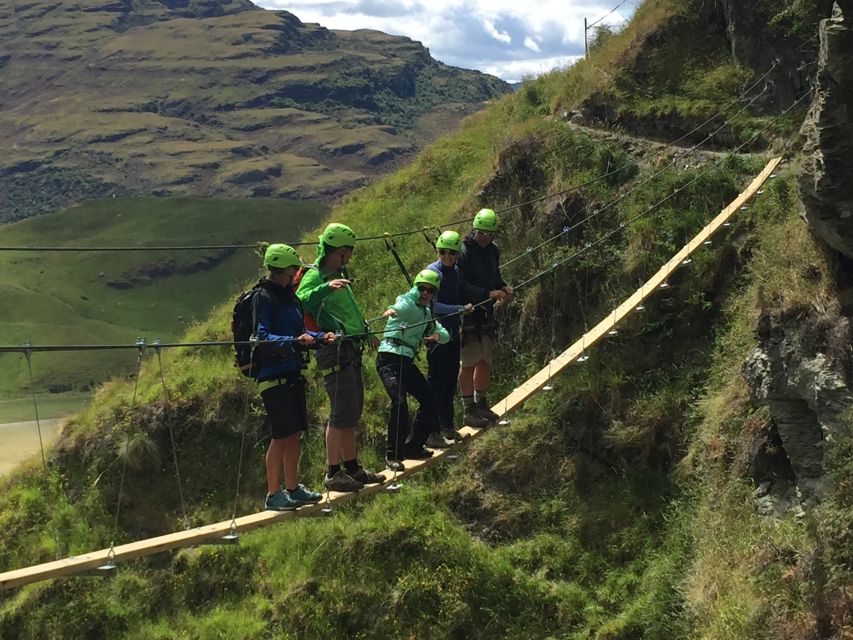
After Level 1, the return to the base takes about 15 minutes on foot. You are no longer climbing the cable route, but you are still walking down mountain terrain, so good hiking shoes matter.
This descent also gives you a chance to settle after the height and effort of the climb. The total activity lasts three hours, which includes arrival, equipment, instruction, walking, the route, snack break, and return. The detailed climbing portion is described as a 1.5-hour introduction, with about one hour spent on the main beginner trail.
That timing explains why you should not schedule a tight connection or another fixed activity immediately afterward. Starting times vary, so check availability when booking, then allow the full three-hour window.
Should you continue to Level 2?
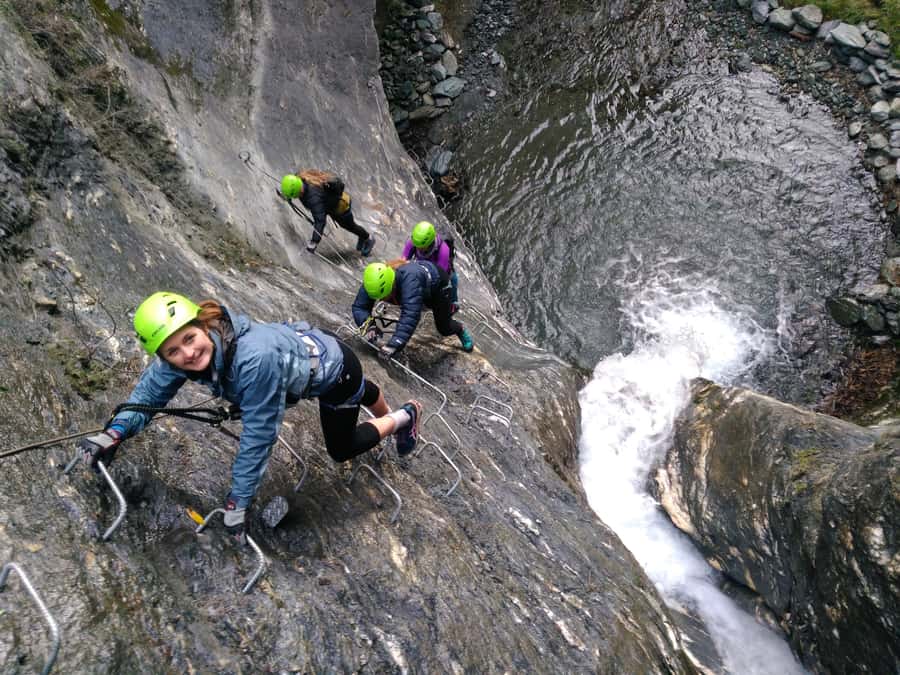
Some departures offer the option to continue to a second level after finishing the beginner climb. Several people who initially booked Level 1 decided to carry on because they still had energy and wanted more height or challenge.
Level 2 is not included in the $118 beginner price, and you need enough time to complete it. It is also more demanding. The useful part is that you do not have to commit before seeing how Level 1 feels. You can use the first route to judge your comfort with the exposure, the equipment, and the physical work.
If you are short on time, Level 1 still gives you the waterfall, bridges, pools, climbing, and mountain views. If you are fit, enjoying yourself, and have time available, ask the guide about the upgrade at the top. Do not treat it as an automatic add-on. The extra route should match your energy and confidence on the day.
Who will enjoy this most
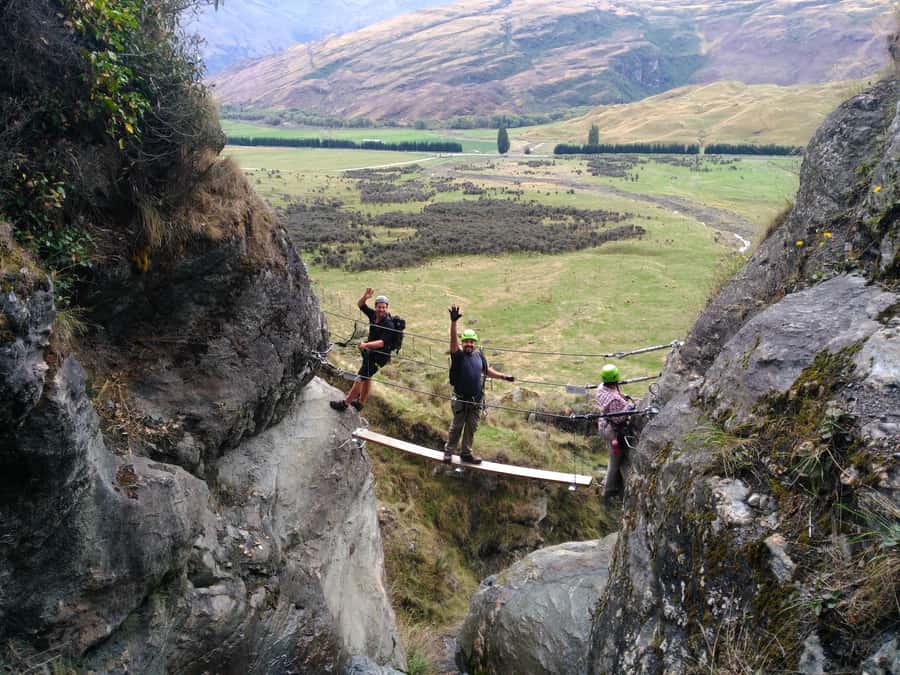
This is a strong choice for you if you want something more active than a viewpoint and have never tried outdoor climbing. The fixed cable system and practice course remove much of the technical barrier, while the guide remains close to the group.
Families can enjoy it if every participant meets the age, height, weight, mobility, and fitness requirements. The minimum age is 10, minimum weight is 40 kilograms, and minimum height is 120 centimeters. The maximum weight is 120 kilograms.
The activity requires full-body mobility and a moderate level of fitness. You should be able to hike, climb, walk on uneven ground, and use your arms and legs for sustained movement. It is not suitable for people with mobility impairments, and open-toed shoes are not allowed.
You do not need previous climbing experience. You do need to accept that the route includes height. Some people who are nervous about heights found the guide support reassuring, while others described the climb as outside their comfort zone. That is the honest middle ground: the system is designed for safety, but it does not remove the sensation of being high on a cliff.
What to wear and pack
Wear weather-appropriate clothing and hiking shoes with a secure sole. The area is beside a waterfall, so conditions can feel wet or cool even if Wanaka town is pleasant.
Bring:
- A water bottle
- Weather-appropriate layers
- A small daypack
- Closed hiking shoes
- A camera or GoPro only if you can secure it safely
Leave spare items at the base in the area provided. Avoid bringing anything that can swing, fall, or catch on the cable. Your hands need to work freely, and your attention should remain on the route.
The activity runs in English. If you are unsure about the physical demands, height exposure, or equipment, contact the provider before booking rather than relying on hope and enthusiasm.
Safety, group size, and guide support
The strongest practical feature is the small group structure. No more than five people climb with each guide, giving the instructor room to watch technique, answer questions, and help when someone hesitates.
That is particularly useful on a first climb. A guide can show you where to put your feet, explain the cable movements again, and keep the group together. The practice route also means your first lesson happens on a simple section rather than midway up the waterfall.
The equipment includes the climbing safety gear, helmet, and harness. You stay connected to the fixed cable while moving along the route. That does not make the activity risk-free, and you still need to follow instructions, but it creates a managed way to experience the cliffs.
The positive guide experience is consistent across the supplied comments. Rocky, Luke, Maddie, Sarah, Connor, and others are described as encouraging, calm, patient, and careful. Do not confuse a friendly manner with a soft activity. The guides help you complete the climb, but you still do the stepping, pulling, and balancing.
Booking flexibility and final value
You can cancel up to 24 hours before the experience for a full refund, and the reserve-now-pay-later option lets you hold a place without paying immediately. Check the start times before booking, since availability changes.
At $118, this is best viewed as a specialist experience rather than a simple short walk. You receive instruction, equipment, a small group, access to a working farm waterfall, and a route with features that are hard to replicate independently.
I would book it for a trip that already includes relaxed sightseeing and needs one memorable physical outing. I would not book it for someone who dislikes heights, cannot manage uneven walking, or wants a purely scenic activity.
Should you book the Twin Falls cable climb?
Book this if you want a beginner-friendly introduction to via ferrata with real exposure, waterfalls, bridges, and a strong sense of achievement. The practice climb and small guide groups make it approachable, while the setting keeps it exciting.
Skip it if your mobility is limited, you weigh outside the stated limits, or the idea of climbing above pools makes you uncomfortable. For everyone else, Level 1 is the sensible starting point. Arrive early, bring water, wear proper shoes, and decide about Level 2 only after you know how the first route feels.
FAQ
Where does the waterfall cable climb take place?
It takes place at Twin Falls, on a working farm about 20 minutes from Wanaka. Meet at the locked farm gate in front of the waterfalls, where you will see the activity provider’s sign.
How long does the experience last?
The total duration is three hours. The introductory climbing portion is about 1.5 hours, with roughly one hour on the beginner route and about 15 minutes for the walk back down.
How much does the beginner cable climb cost?
The listed price is $118 per person. An optional Level 2 continuation may cost extra.
Do I need climbing experience?
No. The guide provides a safety briefing and introductory practice climb before you begin the waterfall route.
What equipment is included?
A helmet, harness, and climbing safety equipment are included. An expert English-speaking guide is also included.
Is food or water provided?
A small snack and water are included. You should bring your own water bottle.
What should I wear?
Wear weather-appropriate clothing and hiking shoes. Open-toed shoes are not allowed.
What is the minimum age for the activity?
Participants must be at least 10 years old and weigh at least 40 kilograms. They must also be at least 120 centimeters tall.
Is the activity suitable for people with limited mobility?
No. The route requires full-body mobility and a moderate level of fitness, and it is not suitable for people with mobility impairments.
Can I cancel the booking?
You can cancel up to 24 hours in advance for a full refund. The reserve-now-pay-later option is also available.
Just added around Wanaka
- Wanaka: Afternoon Boutique Wine Tour★ 5.0 · 3 reviews
- Wanaka: Rob Roy Glacier Guided Hike with Lunch★ 5.0 · 3 reviews
- Wanaka Breweries E-Bike Tour★ 5.0 · 3 reviews
- Introduction to Wanaka Rock Climbing – Half Day★ 5.0 · 3 reviews
- Mou Waho Island Cruise & Self-Guided Nature Walk★ 4.5 · 3 reviews
- Lake Dunstan Trail eBike Adventure (inc Shuttle)★ 5.0 · 4 reviews
- Ultimate Lake Dunstan Bike Hire, Shuttles And Boat Return★ 5.0 · 4 reviews
- Wānaka: Helicopter Scenic Flight Wānaka Experience★ 5.0 · 4 reviews
Queenstown Adventure Sports, compared.
Family Adventures Rafting and Sightseeing Trip in Queenstown
Read our review →Browse the lists this tour appears in