
Reviewed · WANAKA TOURS
Wanaka: Waterfall Climb and Canyon Tour
The most unusual thing about this Wanaka outing is that it combines cable climbing and canyoning in one half-day trip. You climb one side of Twin Falls, follow a cliff trail, then descend the waterfall route by rope, ending with a guided lower on a wire crossing.
I like the small group limit of six, since rope work is easier to learn when the guide can watch each person closely. I also like that training, safety gear, wetsuit equipment, and lunch are included, so the $196 price covers more than a quick scenic stop.
The catch is fitness. This is for adventurous beginners, not for anyone seeking a gentle sightseeing walk. You need to handle steep, exposed and uneven ground, heights, water, and up to five active hours.
In This Review
- Key points to know before booking
- Why this Twin Falls tour feels different
- Reaching the meeting point from Wanaka
- Starting with the Level 1 cable climb
- Walking the cliffside trail to Twin Falls
- Rappelling six waterfall drops
- Finishing with the wire crossing
- What the $196 price includes
- Fitness, height, and age requirements
- Small groups and the guide-led approach
- When this tour offers the best value
- Should you book the Twin Falls climb and canyon tour?
- FAQ
- Where does the tour meet?
- How long does the experience last?
- Do I need previous climbing or abseiling experience?
- What should I bring?
- Is equipment included?
- What are the age and weight limits?
- Can I cancel or pay later?
Key points to know before booking
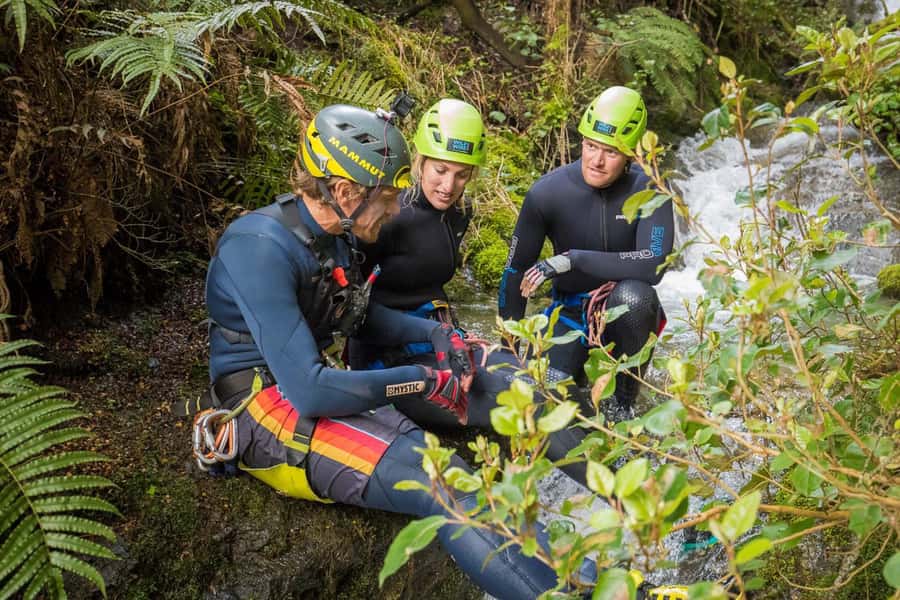
- Two adventure skills in one trip: Learn basic climbing and abseiling rather than doing only one activity.
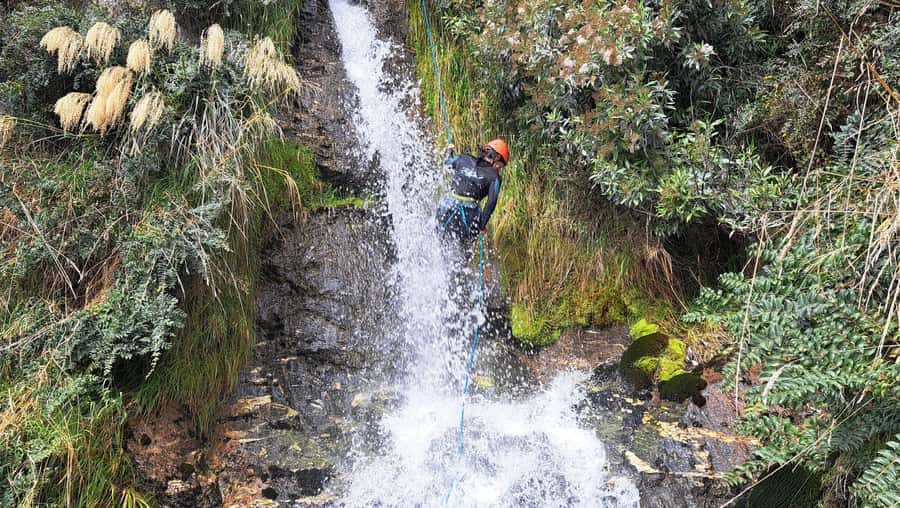
- Six waterfall rappels: The canyon section gives you repeated rope descents beside and through the lower Twin Falls route.
- Small groups matter: A maximum of six people allows more personal guidance and a steadier pace.
- Wet-weather preparation is built in: A wetsuit and wetsuit socks are supplied, but you still need swimwear, a towel, water, and shoes that can get wet.
- The setting is a major part of the day: Native bush, mountain views, lake views, and close contact with the waterfalls fill the route.
- The physical bar is real: You need a head for heights and enough stamina to stay active for much of the six-hour outing.
Why this Twin Falls tour feels different
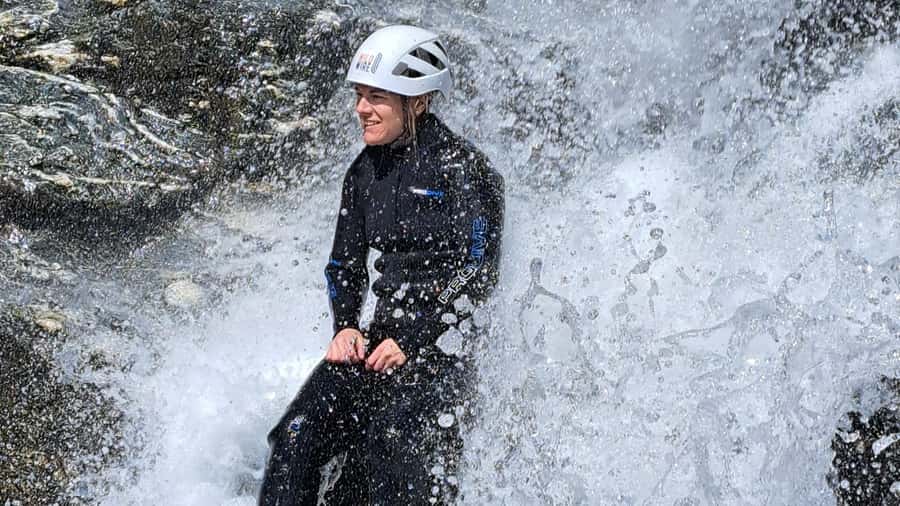
Many outdoor tours near Wanaka ask you to choose between a climbing session and a canyon route. This one joins the two, which gives the day a natural rhythm. You first learn how to move upward, then use related rope skills to work your way down.
That change of direction is more than a clever sales point. Climbing asks you to focus on hand and foot placement, while abseiling asks you to control your descent and trust the equipment. You get a taste of both skills without needing previous experience.
The route also keeps you close to the natural setting. You are not simply looking at Twin Falls from a roadside viewpoint. You move through native bush, walk along a cliffside trail, and get close to the falling water. The mountain and lake views add a wider sense of place between the more concentrated rope sections.
The tour is conducted in English, with an experienced guide beside you throughout. That matters for first-timers. You are taught how to climb and descend ropes, then supported as you put those instructions into practice.
A few more Wanaka days out worth weighing up
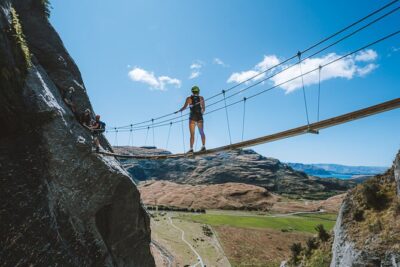
- Wildwire Wanaka- Level 2 (4 Hours)
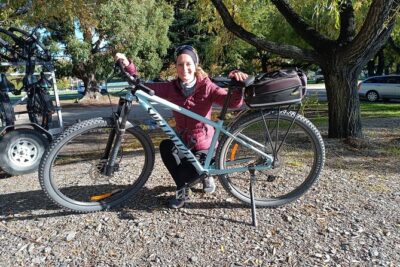
★ 5.0 · 467 reviews - Bike the Wanaka and Hawea Trails
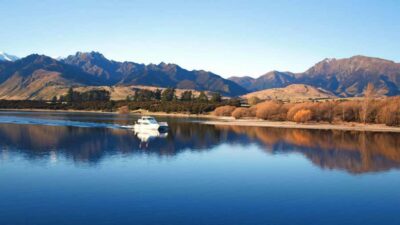
★ 5.0 · 346 reviews - Lake Wanaka Happy Hour Cruise
★ 4.6 · 313 reviews
Reaching the meeting point from Wanaka
The meeting point is about 20 minutes west of Wanaka town on Wanaka-Mt Aspiring Road. Follow the road beside the lake toward Treble Cone Ski Field and Mt. Aspiring National Park.
Look for a cattle stop and pull out immediately to the left, in front of two large waterfalls. The meeting point is at a locked farm gate with the local partner’s sign. If you reach the ski field road or a gravel road, you have gone too far.
This is a self-drive meeting point, so allow time to leave Wanaka and identify the pullout safely. The waterfalls are the useful visual clue, but do not wait until the last moment to slow down. If you are using a map app, check the final approach before leaving town, since the directions depend on recognizing the correct roadside gate.
You should arrive ready for an outdoor activity rather than in ordinary sightseeing clothes. Bring swimwear, a towel, water, and sturdy hiking shoes that you do not mind getting wet. A waterproof phone or camera case is optional, but ordinary phones should not be trusted around repeated waterfall descents without protection.
Starting with the Level 1 cable climb
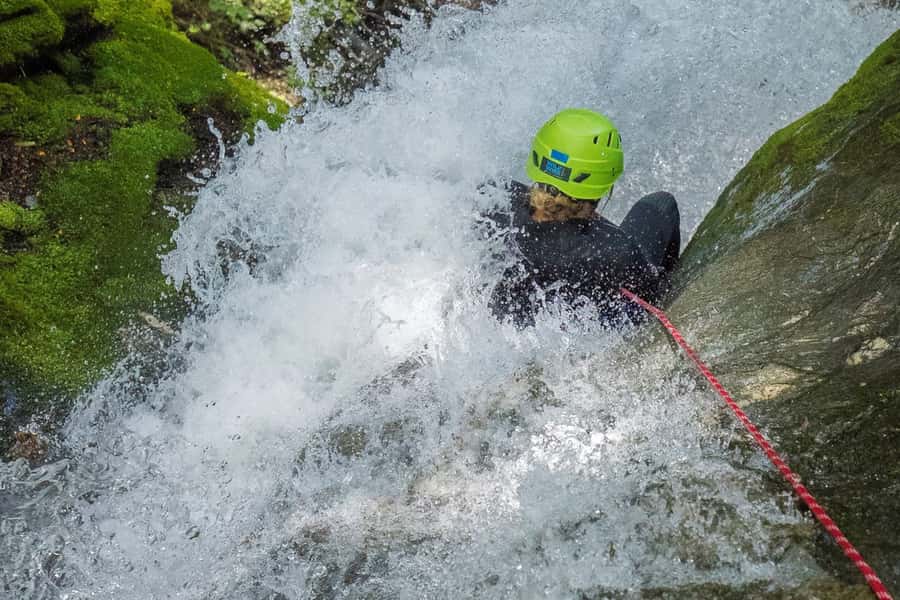
The first active section is a Level 1 cable climb. This gives you an introduction to the equipment and the basic movements before the route becomes more focused on canyoning.
No earlier climbing or abseiling experience is required. That makes the tour accessible to a fit beginner who is curious about rope sports but does not want to sign up for an advanced route.
Beginner-friendly does not mean effortless. You still need to move over uneven ground and manage yourself on steep, exposed cliffs. If you are uneasy with heights, the open setting may feel demanding even at the introductory level.
The benefit of starting on the climb is that you have time to learn before reaching the waterfall descents. Pay close attention to the guide’s safety training, ask questions early, and use the first section to get comfortable with the harness and rope system.
Walking the cliffside trail to Twin Falls
After the climb, you follow a cliffside trail to the next waterfall section. This short transition links the two halves of the experience, but it also reinforces the physical nature of the day.
The trail is not described as a flat path. You should expect uneven terrain, steep sections, and exposed areas. Hiking shoes are important here, even though the tour supplies a wetsuit and wetsuit socks for the wet portions.
This is also where the setting earns its keep. You have native bush around you, with views toward the mountains and lake. The scenery gives you a chance to pause between technical activities, though the route remains active rather than becoming a scenic walk.
If you are booking for the photographs, remember that the views are only one part of the day. You will spend plenty of time concentrating on footing, ropes, and the waterfall route. A small waterproof camera can be useful, but taking pictures should never distract from the guide’s instructions.
Something different, still within reach of Wanaka:
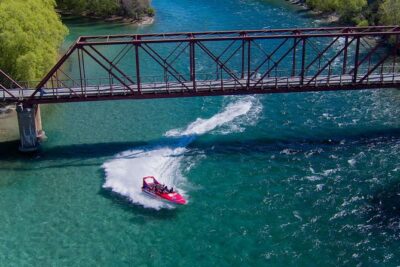
- Small Group Jet Boat Adventure on the Clutha River from Wanaka
★ 5.0 · 302 reviews - Wanaka: Water Taxi & Mou Waho Island Tour
★ 4.8 · 299 reviews - Cardrona High Country Pub Trail Horse Trek (Intermediate level+)
★ 5.0 · 269 reviews - Queenstown: Small Group Mt Cook Day Tour
★ 4.7 · 262 reviews
Rappelling six waterfall drops
The main event is the lower section of the right-hand Twin Falls Waterfalls. Here, you learn to abseil, also called rappel, down the waterfall route.
The experience includes six waterfall descents. That repeated format is valuable because the first rappel can feel like a major mental step, while later descents give you a chance to settle into the technique. You are not expected to arrive knowing how to control the rope. The guide teaches you the process and remains with you during the activity.
Expect to get wet. The supplied wetsuit and wetsuit socks are practical equipment, not decoration. You should bring your own swimsuit to wear underneath, along with a towel for afterward.
The waterfalls make the rope work more memorable, but they also add conditions you cannot fully control. Water, slippery surfaces, exposure, and height all form part of the challenge. You need to be able to listen carefully, follow directions, and keep moving for a long active period.
This is where the tour suits a particular kind of beginner. If you want to try canyoning but prefer a guide-led introduction, the instruction and small group can make the experience manageable. If you dislike heights, cold water, or physical effort, the six rappels may feel like too much.
Finishing with the wire crossing
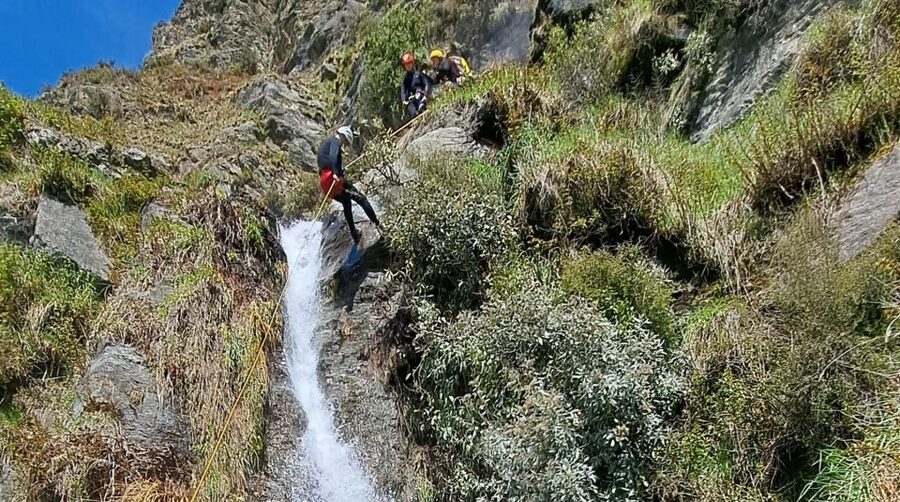
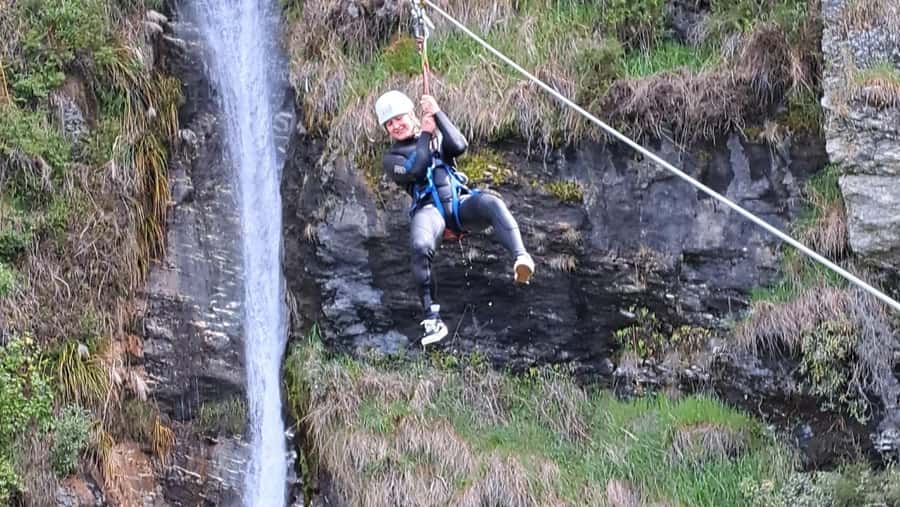
The final technical section is a guided lower on the wire crossing, followed by a short walk back to the base. It gives the tour a clear finish rather than simply ending at the last waterfall.
A wire crossing can sound like the easiest part after six rappels, but it still requires attention and trust in the safety system. The guide manages the process while you make your way across or along the wire route as instructed.
The walk back is short, though the full day is not. By this point, you may be wet, tired, and ready for lunch. The included meal is a useful touch because you are active for much of the outing, and you do not need to arrange food separately during the tour.
The overall timing is six hours. The stated active period can reach up to five hours, so keep the remaining time in perspective. This is not a quick two-hour introduction squeezed between other plans. Give yourself the rest of the day at an easy pace.
What the $196 price includes
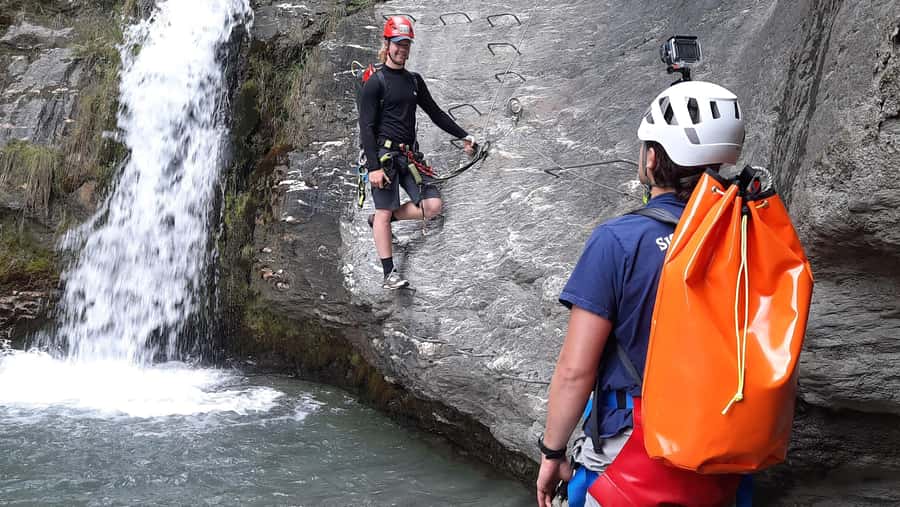
At $196 per person, this is a premium half-day activity, but the price covers a fairly complete package. You receive:
- An experienced professional guide
- Safety training
- Climbing and abseiling equipment
- Wetsuit
- Wetsuit socks
- Lunch
That list affects the value. You are paying for instruction, technical equipment, and a small-group outdoor experience, not just access to a waterfall. Renting or buying suitable rope-sport equipment separately would add cost and would not provide the same guided support.
The small-group limit of six strengthens the value. In a group of three, for example, the guide can keep the pace personal and may have room for extra fun or route variations when conditions and ability allow. The exact route always depends on the guide and the setting, so do not book expecting a private tour, but six people is still a useful cap for this kind of activity.
You must supply your own swimsuit, towel, water, and sturdy shoes. A waterproof phone case is optional. Those are modest additions, but forgetting the towel or suitable footwear would make the day less comfortable.
Fitness, height, and age requirements
The minimum age is 14. The tour also excludes anyone under 120 centimeters or 40 kilograms, and anyone over 100 kilograms.
Those limits are practical safety requirements for the equipment and route. You also need to be active for up to five hours, walk on uneven terrain, move through steep exposed areas, and have a head for heights.
I would think of the tour as a fit beginner activity, not an introductory stroll. You do not need technical experience, but you do need basic stamina and confidence in your body. If you regularly manage hikes with uneven surfaces and are willing to learn rope skills, the tour may be a good match.
The tour is less suitable if you are recovering from an injury, uncomfortable on exposed cliffs, or hoping to avoid getting wet. The supplied equipment removes some barriers, but it does not remove the physical work.
Small groups and the guide-led approach
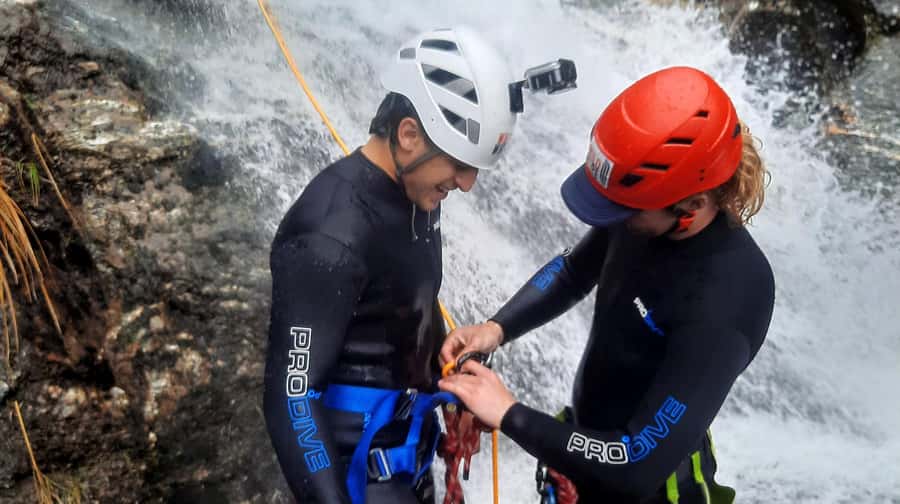
A maximum of six participants is one of the strongest features here. Technical activities work better when instructions are clear and the guide has time to check each person before a descent.
The guide provides safety training and remains with you throughout the trip. That gives you a structured way to learn the climbing and abseiling skills, rather than trying to copy someone else or work out the equipment alone.
The only listed language is English. If you need detailed instruction in another language, this may not be the right choice. For English speakers, the format is direct: listen to the safety briefing, ask when something is unclear, and follow the guide’s directions at each rope section.
A small group can also help with pace. One verified booking described a group of three, with enough flexibility to move at its own speed and take extra detours for added fun. That is a useful indication of how the experience can feel in a very small group, though your group size and route may differ.
When this tour offers the best value
This tour is a strong choice if you want a full active day near Wanaka and would like to try more than one rope skill. The combination of climbing, canyon walking, waterfall rappels, and the wire crossing gives you variety for the price.
It is also a good fit if you care about the setting but do not want a purely passive viewpoint. The lake and mountain views are part of the route, while the native bush and waterfalls keep you connected to the immediate surroundings.
The value is weaker if you only want a short waterfall visit or a gentle outdoor activity. In that case, you would be paying for gear, training, lunch, and several hours of physical activity that you may not want.
Free cancellation up to 24 hours before the start gives you some flexibility, and the reserve-now, pay-later option can help if your South Island plans are still shifting. Still, check the available start times before committing your day, since the activity lasts six hours.
Should you book the Twin Falls climb and canyon tour?
Book it if you are at least 14, fit, comfortable with heights, and eager to learn both climbing and abseiling without prior experience. The small group, supplied wetsuit, lunch, and repeated waterfall descents make this more than a standard scenic outing.
Think twice if you want dry clothes, flat paths, or a relaxed pace. The route includes steep exposed terrain, uneven ground, water, and up to five active hours.
For the right person, this is one of Wanaka’s more complete outdoor choices. You get instruction, equipment, dramatic waterfalls, and a clear physical challenge in one well-packed day. Bring proper shoes, protect your phone, listen closely to the guide, and save room in your schedule to recover afterward.
FAQ
Where does the tour meet?
Meet at the locked farm gate with the local partner’s sign, in front of two large waterfalls. From Wanaka, follow Wanaka-Mt Aspiring Road west for about 20 minutes toward Treble Cone Ski Field and Mt. Aspiring National Park.
How long does the experience last?
The tour lasts six hours. You should be prepared to stay active for up to five hours during the outing.
Do I need previous climbing or abseiling experience?
No. Previous climbing or abseiling experience is not required. The guide provides training and teaches you how to climb and descend ropes during the tour.
What should I bring?
Bring swimwear, a towel, water, hiking shoes or other sturdy shoes that can get wet, and optionally a waterproof phone or camera case.
Is equipment included?
Yes. The tour includes safety equipment, a wetsuit, and wetsuit socks, along with safety training and an experienced professional guide.
What are the age and weight limits?
The tour is not suitable for children under 14, people under 120 centimeters or 40 kilograms, or people over 100 kilograms.
Can I cancel or pay later?
You can cancel up to 24 hours in advance for a full refund. The reserve-now, pay-later option lets you book without paying on the day of booking.
Just added around Wanaka
- Wanaka: Afternoon Boutique Wine Tour★ 5.0 · 3 reviews
- Wanaka: Rob Roy Glacier Guided Hike with Lunch★ 5.0 · 3 reviews
- Wanaka Breweries E-Bike Tour★ 5.0 · 3 reviews
- Introduction to Wanaka Rock Climbing – Half Day★ 5.0 · 3 reviews
- Mou Waho Island Cruise & Self-Guided Nature Walk★ 4.5 · 3 reviews
- Lake Dunstan Trail eBike Adventure (inc Shuttle)★ 5.0 · 4 reviews
- Ultimate Lake Dunstan Bike Hire, Shuttles And Boat Return★ 5.0 · 4 reviews
- Wānaka: Helicopter Scenic Flight Wānaka Experience★ 5.0 · 4 reviews
Wanaka Tours, compared.
Small Group Jet Boat Adventure on the Clutha River from Wanaka
Read our review →
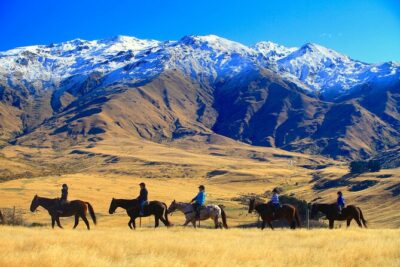
Cardrona High Country Pub Trail Horse Trek (Intermediate level+)
Read our review →
Browse the lists this tour appears in